
Cart
Your cart is empty, but doesn't have to be..
Your cart is empty, but doesn't have to be..
Rosén Innovation COM |16/07, 2026
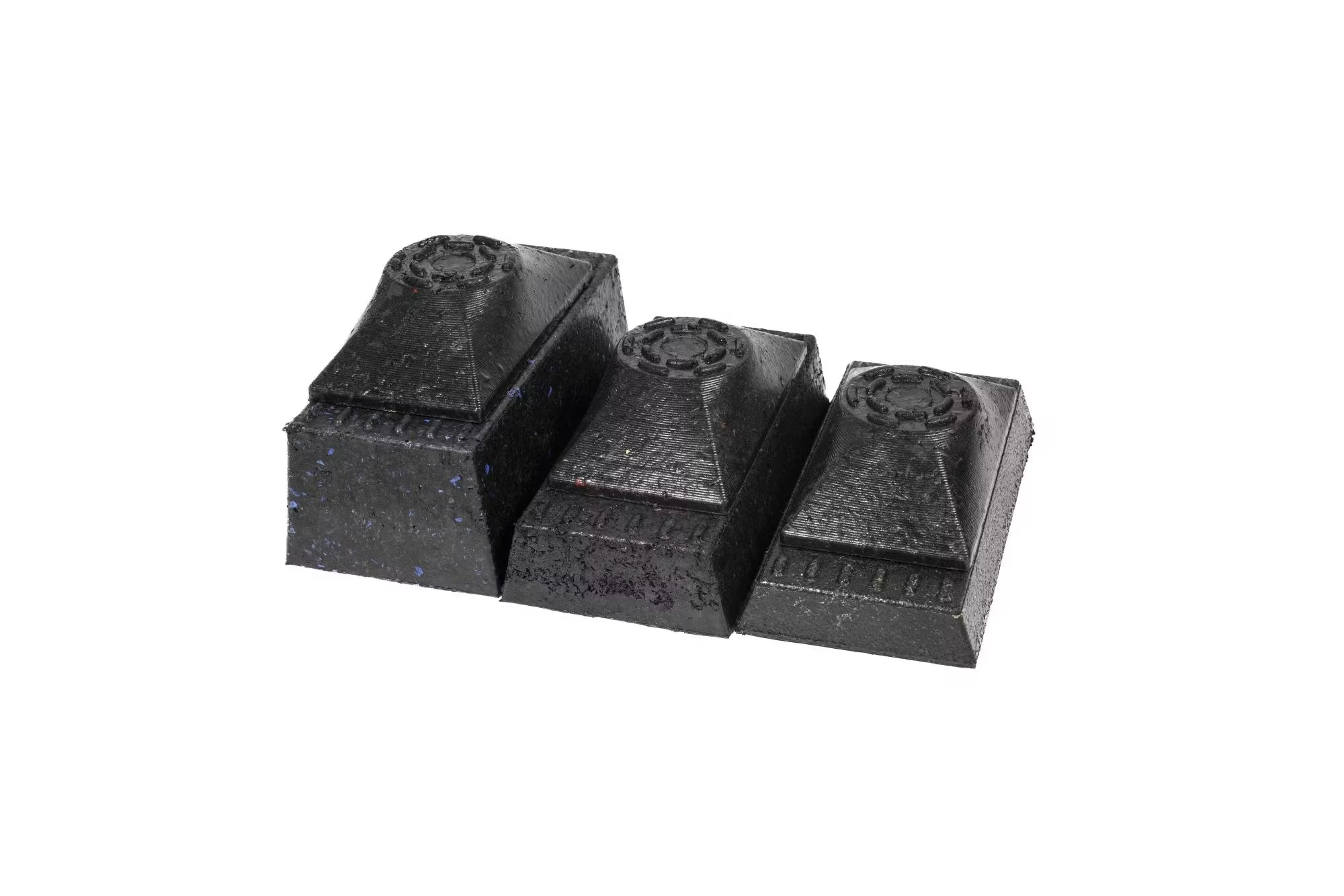
vehicle lift pads, record these details for each lift model in the facility:
This small inspection prevents a common purchasing error: ordering pads based on a photo or a nominal lift brand rather than the actual adapter dimensions. Lift models change, previous owners may have modified adapters, and replacement arms do not always use the original configuration.
Both polyurethane and rubber lift pads have a place in a working shop. The better choice depends on the loading pattern, exposure, storage conditions, and the level of abrasion expected.
Polyurethane is often selected where high wear resistance, tear resistance, and dimensional stability are priorities. It can provide a firm but protective contact surface that holds its shape through repeated lifting cycles. This is useful in high-throughput service bays where pads see constant contact with dirty underbodies, road grit, oil residue, and uneven lifting points. High-quality polyurethane can also offer a strong strength-to-weight balance and is available in recyclable formulations.
Rubber is familiar, compliant, and effective for many general-purpose applications. It can conform well to slightly uneven surfaces and provides good grip. However, rubber compounds vary widely. Some soften, crack, swell, or wear quickly when exposed to oils, chemicals, heat, and repeated compression. A low-cost rubber pad may look acceptable when installed but become unreliable long before the lift requires service.
Do not select material by hardness alone. A pad that is excessively hard may transmit concentrated force into a vulnerable body seam. One that is too soft may compress excessively, lose its shape, or allow the contact point to become unstable. The right balance comes from the pad geometry, compound quality, and the specific vehicle application.
Modern service work requires closer attention to lifting instructions than it did when full-frame vehicles were more common. Unibody construction depends on designated reinforced locations. Electric vehicles add another concern: battery trays and protective shields can occupy much of the vehicle floor, while the approved lifting points may be narrow and precisely positioned.
Technicians should identify the manufacturer-approved lift points before positioning arms. A slotted pad should align with the pinch weld, not merely touch it. The lift arms must remain clear of rocker panels, plastic trim, brake lines, wiring, and battery housings. On vehicles with jack pads or special lifting pucks, use the specified interface rather than attempting to adapt a flat pad to a location it was not designed to support.
Raise the vehicle only far enough to confirm contact, then stop and inspect. Check that each arm is seated, the pad is centered, and the vehicle remains level. This verification step takes seconds and is far less costly than repairing crushed sill panels or underbody components.
Lift pads are consumable workshop components. Their replacement interval depends on vehicle volume, load types, housekeeping, chemical exposure, and whether technicians routinely lift at correct points. There is no single calendar date that fits every shop, but regular inspection should be part of lift maintenance.
Remove worn pads from service when they show deep cuts, cracking, permanent flattening, missing edges, loose fit, severe glazing, chemical swelling, or deformation around the mounting area. A pad that has hardened and become slippery is also due for replacement, even if it has not visibly torn.
Inspect the adapter below the pad at the same time. A new pad cannot correct a bent arm, damaged screw adapter, worn retaining feature, or lift that has not been maintained according to its service requirements. Keep replacement pads identified by lift bay and adapter size so the team does not install a near-match during a rush.
The most effective shops make pad selection part of their normal vehicle intake and lift inspection process. Technicians need clear access to approved lift-point information, and managers need a simple way to stock compatible replacements. This is especially valuable for fleet operations, where the same vehicle types return often and a correct pad setup can be standardized.
For mixed workshops, organize pads by adapter size and application rather than storing every spare in one unmarked drawer. Label slot widths, diameters, and lift compatibility. If a new model of EV, van, or SUV enters regular service, test the lifting setup during a controlled job before it becomes a rushed repair at the end of the day.
Rosén Innovation develops Swedish-made polyurethane workplace and workshop products for repeated industrial use, with a focus on lighter handling, durable performance, and recyclable material options. For lift pads, correct fit remains the starting point: a well-made pad only performs as intended when it is matched to the adapter and the vehicle’s approved support location.
A lift is safest when every contact point is deliberate. Measure the adapter, choose the pad profile for the vehicle, inspect it regularly, and replace it before wear turns a simple service component into an avoidable risk.
">
A two-post lift can have the capacity to raise a loaded truck, yet a small contact pad can still decide whether the job is safe and damage-free. Vehicle lift pads create the interface between the lift arm and the vehicle’s approved lifting point. When that interface is wrong, technicians can crush a pinch weld, mark a coated frame rail, allow an arm to shift, or start work with an unstable vehicle overhead.
For professional workshops, lift pads are not minor accessories. They are working safety components that protect vehicles, equipment, and the people beneath the lift. The correct pad must match the lift adapter, the vehicle’s lifting points, and the daily conditions in the shop.
Vehicle lift pads spread contact pressure across the intended support point while providing grip and a degree of protection against metal-to-metal contact. They are commonly fitted to lift arms, round adapters, screw pads, and support blocks on two-post and four-post vehicle lifts.
The pad material matters because modern vehicles use a broad mix of painted steel, aluminum, composites, plastic undertrays, battery enclosures, and formed pinch welds. A hard bare-metal adapter may be acceptable on a heavy-duty frame in some applications, but it is a poor choice for many passenger vehicles. A properly shaped polyurethane or rubber pad helps hold the lifting point in position without unnecessarily damaging the finish.
Pads also reduce wear on the lift itself. Repeated steel-on-steel contact can score adapters and create uneven bearing surfaces. Over time, that makes accurate placement harder and can encourage shortcuts during busy service work.
The first question is not which pad looks strongest. It is whether it fits the lift adapter correctly. Measure the outside diameter, inside diameter, height, recess depth, and any retaining lip or fastening arrangement before ordering. A pad that is too loose can rotate, walk off the adapter, or disappear during use. One that is too tight may be forced into place and split before it has done a full day’s work.
Check the pad shape against the vehicle contact point as well. Flat pads work well where a broad, flat jacking area is specified. Slotted pads are designed to straddle a pinch weld so the load is carried on the reinforced area beside it rather than directly flattening the seam. Raised or contoured pads can suit chassis rails and vehicle-specific lifting points.
A workshop that services varied fleets usually benefits from more than one configuration. Trying to use one universal pad on sedans, SUVs, EVs, vans, and light trucks can produce poor contact even if the lift arms themselves are rated for the load. Keep the right pad style available at each bay rather than asking technicians to improvise with wood blocks, loose rubber, or stacked materials.
Before replacing vehicle lift pads, record these details for each lift model in the facility:
This small inspection prevents a common purchasing error: ordering pads based on a photo or a nominal lift brand rather than the actual adapter dimensions. Lift models change, previous owners may have modified adapters, and replacement arms do not always use the original configuration.
Both polyurethane and rubber lift pads have a place in a working shop. The better choice depends on the loading pattern, exposure, storage conditions, and the level of abrasion expected.
Polyurethane is often selected where high wear resistance, tear resistance, and dimensional stability are priorities. It can provide a firm but protective contact surface that holds its shape through repeated lifting cycles. This is useful in high-throughput service bays where pads see constant contact with dirty underbodies, road grit, oil residue, and uneven lifting points. High-quality polyurethane can also offer a strong strength-to-weight balance and is available in recyclable formulations.
Rubber is familiar, compliant, and effective for many general-purpose applications. It can conform well to slightly uneven surfaces and provides good grip. However, rubber compounds vary widely. Some soften, crack, swell, or wear quickly when exposed to oils, chemicals, heat, and repeated compression. A low-cost rubber pad may look acceptable when installed but become unreliable long before the lift requires service.
Do not select material by hardness alone. A pad that is excessively hard may transmit concentrated force into a vulnerable body seam. One that is too soft may compress excessively, lose its shape, or allow the contact point to become unstable. The right balance comes from the pad geometry, compound quality, and the specific vehicle application.
Modern service work requires closer attention to lifting instructions than it did when full-frame vehicles were more common. Unibody construction depends on designated reinforced locations. Electric vehicles add another concern: battery trays and protective shields can occupy much of the vehicle floor, while the approved lifting points may be narrow and precisely positioned.
Technicians should identify the manufacturer-approved lift points before positioning arms. A slotted pad should align with the pinch weld, not merely touch it. The lift arms must remain clear of rocker panels, plastic trim, brake lines, wiring, and battery housings. On vehicles with jack pads or special lifting pucks, use the specified interface rather than attempting to adapt a flat pad to a location it was not designed to support.
Raise the vehicle only far enough to confirm contact, then stop and inspect. Check that each arm is seated, the pad is centered, and the vehicle remains level. This verification step takes seconds and is far less costly than repairing crushed sill panels or underbody components.
Lift pads are consumable workshop components. Their replacement interval depends on vehicle volume, load types, housekeeping, chemical exposure, and whether technicians routinely lift at correct points. There is no single calendar date that fits every shop, but regular inspection should be part of lift maintenance.
Remove worn pads from service when they show deep cuts, cracking, permanent flattening, missing edges, loose fit, severe glazing, chemical swelling, or deformation around the mounting area. A pad that has hardened and become slippery is also due for replacement, even if it has not visibly torn.
Inspect the adapter below the pad at the same time. A new pad cannot correct a bent arm, damaged screw adapter, worn retaining feature, or lift that has not been maintained according to its service requirements. Keep replacement pads identified by lift bay and adapter size so the team does not install a near-match during a rush.
The most effective shops make pad selection part of their normal vehicle intake and lift inspection process. Technicians need clear access to approved lift-point information, and managers need a simple way to stock compatible replacements. This is especially valuable for fleet operations, where the same vehicle types return often and a correct pad setup can be standardized.
For mixed workshops, organize pads by adapter size and application rather than storing every spare in one unmarked drawer. Label slot widths, diameters, and lift compatibility. If a new model of EV, van, or SUV enters regular service, test the lifting setup during a controlled job before it becomes a rushed repair at the end of the day.
Rosén Innovation develops Swedish-made polyurethane workplace and workshop products for repeated industrial use, with a focus on lighter handling, durable performance, and recyclable material options. For lift pads, correct fit remains the starting point: a well-made pad only performs as intended when it is matched to the adapter and the vehicle’s approved support location.
A lift is safest when every contact point is deliberate. Measure the adapter, choose the pad profile for the vehicle, inspect it regularly, and replace it before wear turns a simple service component into an avoidable risk.