
Cart
Your cart is empty, but doesn't have to be..
Your cart is empty, but doesn't have to be..
Rosén Innovation COM |10/08, 2026
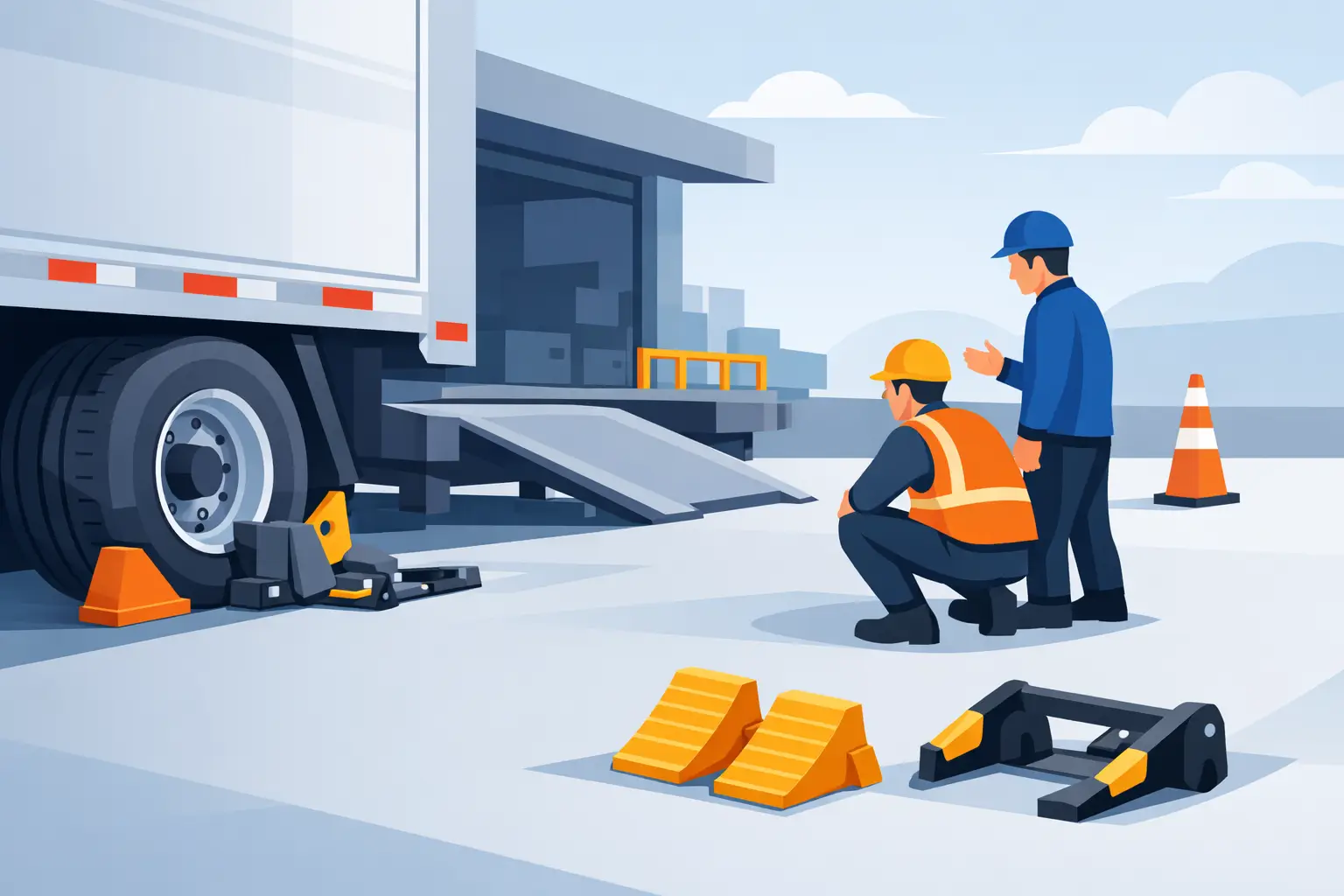
wheel chocking, use a restraint that is sized and rated for that duty.
For many professional operations, molded polyurethane chocks are the most effective alternative to traditional wood, steel, or dense rubber blocks. Their main advantage is the performance balance. Polyurethane can provide high strength and wear resistance at a significantly lower weight than comparable metal products, reducing the strain on ramp crews, drivers, and technicians who handle chocks repeatedly throughout a shift.
Weight matters more than it first appears. A heavy chock may seem durable, yet it is more likely to be dropped, left behind, carried incorrectly, or avoided when time is short. A lighter chock that remains stable under the intended load is easier to deploy consistently. Consistent use is a safety feature.
Molded designs also allow the wheel-contact profile, base area, carrying handle, and rope attachment to be engineered for a specific application. A broad base can improve stability on paved surfaces. A wheel-facing contour can help distribute contact rather than concentrating force on one sharp edge. This is particularly relevant for aircraft tires, GSE, and finished workshop floors where equipment damage is not acceptable.
Unlike wood, polyurethane does not absorb water, splinter, or rot. Unlike unprotected metal, it will not corrode in the same way or create the same risk of hard-edge contact against tires and rims. It also supports a more circular material choice when the product is designed for recycling at the end of service life. Rosén Innovation develops and manufactures recyclable polyurethane solutions in Sweden for demanding industrial use.
That said, polyurethane is not automatically the right answer in every case. The compound, geometry, and product size still need to be selected for the equipment and environment. An undersized chock is not made safe merely because it uses a premium material.
Rubber wheel chocks remain common because they offer grip and a familiar feel. They can perform well on many surfaces, especially where moderate loads and routine vehicle parking are involved. Their limitations are usually weight, inconsistent quality between products, and aging caused by oils, UV exposure, and repeated compression. Low-grade rubber may crack, deform, or leave marks on light-colored floors.
Metal chocks are often selected for severe-duty settings or as part of established aviation equipment inventories. Their high mass can be useful in specific designs, but it also creates a manual-handling issue. Metal can damage surfaces, wheels, and nearby equipment when dropped. In wet or icy conditions, material alone does not guarantee grip. The base shape and surface contact remain critical.
Wood blocks are inexpensive and readily available, which explains their continued use in temporary situations. They are not a reliable long-term wheel restraint program. Moisture, splits, hidden damage, and inconsistent dimensions make wooden blocks difficult to standardize and inspect. For controlled operations, replace improvised wood with purpose-designed restraints.
Fixed wheel cradles and dock-mounted restraints are another alternative when equipment always parks in the same position. They can be highly effective at loading bays, wash areas, test stations, and dedicated maintenance positions. Their drawback is obvious: they do not travel with the vehicle and offer little flexibility when equipment is repositioned or parked elsewhere.
The restraint decision should begin with the actual operating condition, not a generic equipment category. A chock for a helicopter wheel, a widebody aircraft tire, a baggage tractor, and a service truck will have different dimensional and load requirements. Wheel diameter, tire width, tire pressure, vehicle mass, and expected movement direction all affect selection.
Surface conditions are equally important. Smooth concrete, grooved ramp pavement, asphalt, epoxy-coated floors, gravel, and wet surfaces create different friction conditions. On a slope, the need for correct placement and paired restraint becomes even more important. The restraint must sit squarely against the tire and be positioned on the side that opposes the likely direction of travel.
Consider the working environment as well. In a hangar or automotive workshop, a chock should protect the floor and be easy to clean. On an airport ramp, crews may need high visibility, a secure handle or rope, and a product that remains manageable in rain, cold, fuel-exposed areas, and high-turnover operations. For GSE fleets, standardizing one or two correctly sized chock models can simplify training, storage, replacement, and daily inspections.
Do not use color as the only identification method. Marking, size control, and clear allocation by vehicle or aircraft type make it easier for staff to select the correct restraint quickly.
Even the best chock cannot compensate for an unclear process. Before servicing begins, operators should verify that the vehicle is in the required parked condition, restraints are in the correct positions, and the work area is controlled. For aircraft, always follow the applicable aircraft manufacturer instructions, operator procedures, and ramp rules. For vehicle lifts, follow lift manufacturer guidance and confirm that the vehicle is properly supported before anyone works underneath it.
Inspection should be routine. Check for cuts, cracking, deformation, worn contact faces, embedded debris, damaged ropes or handles, and contamination from oil or chemicals. Retire products that no longer sit flat or maintain their intended shape. This is especially relevant for legacy rubber and wood products, where internal deterioration is not always obvious at a quick glance.
Storage also affects performance. Keep restraints accessible at the point of use rather than stacked in a distant cabinet. If crews must search for equipment, compliance drops when operations become busy. Dedicated storage brackets, marked stations, or vehicle-mounted locations make correct use faster.
The lowest-cost wheel restraint can become expensive when it needs frequent replacement, damages a floor, delays an operation, or increases lifting strain for a team handling it hundreds of times per week. Evaluate service life, product weight, recyclability, cleaning needs, and fit alongside initial price.
For larger fleets or multiple work sites, standardization is often the strongest purchasing decision. A defined range of correctly matched restraints creates clearer training and simpler replenishment. It also lets purchasing teams order with confidence when stock needs to be replaced quickly.
A good wheel restraint should be easy to pick up, hard to misuse, and built to stay dependable through repeated heavy work. Select the alternative that fits the equipment and procedure, then make it available exactly where the crew needs it.
">
A wheel restraint is a small component with a large job: prevent unplanned movement while people load, service, inspect, lift, or park equipment. When teams search for wheel restraint alternatives, they are usually not looking to remove that protection. They are looking for a better answer than heavy, damaged, poorly fitting, or hard-to-handle conventional chocks.
For aircraft, ground-support equipment, trucks, trailers, and workshop vehicles, the right restraint must match the wheel, weight, slope, surface, and operating procedure. A solution that is acceptable for a parked light vehicle may be completely unsuitable on an active ramp or beneath a vehicle on a lift. The practical question is not which product looks strongest. It is which system reliably prevents movement without adding unnecessary weight, handling strain, or damage risk.
In most operations, the alternative is not no restraint. Parking brakes, transmission locks, and hydraulic systems can fail, be incorrectly applied, or be unavailable during maintenance. Physical restraint remains the direct, visible backup that crews can inspect before work starts.
The real alternatives are different restraint designs and materials. These include polyurethane wheel chocks, rubber chocks, metal chocks, wood blocks, fixed wheel cradles, and vehicle-specific restraint systems. Each has a place, but they do not provide the same grip, portability, durability, or compatibility.
A wheel restraint must also be distinguished from a barrier. Cones, parking curbs, chains, and painted stop lines help organize traffic, but they are not designed to stop a loaded vehicle or aircraft from rolling. Where a procedure requires wheel chocking, use a restraint that is sized and rated for that duty.
For many professional operations, molded polyurethane chocks are the most effective alternative to traditional wood, steel, or dense rubber blocks. Their main advantage is the performance balance. Polyurethane can provide high strength and wear resistance at a significantly lower weight than comparable metal products, reducing the strain on ramp crews, drivers, and technicians who handle chocks repeatedly throughout a shift.
Weight matters more than it first appears. A heavy chock may seem durable, yet it is more likely to be dropped, left behind, carried incorrectly, or avoided when time is short. A lighter chock that remains stable under the intended load is easier to deploy consistently. Consistent use is a safety feature.
Molded designs also allow the wheel-contact profile, base area, carrying handle, and rope attachment to be engineered for a specific application. A broad base can improve stability on paved surfaces. A wheel-facing contour can help distribute contact rather than concentrating force on one sharp edge. This is particularly relevant for aircraft tires, GSE, and finished workshop floors where equipment damage is not acceptable.
Unlike wood, polyurethane does not absorb water, splinter, or rot. Unlike unprotected metal, it will not corrode in the same way or create the same risk of hard-edge contact against tires and rims. It also supports a more circular material choice when the product is designed for recycling at the end of service life. Rosén Innovation develops and manufactures recyclable polyurethane solutions in Sweden for demanding industrial use.
That said, polyurethane is not automatically the right answer in every case. The compound, geometry, and product size still need to be selected for the equipment and environment. An undersized chock is not made safe merely because it uses a premium material.
Rubber wheel chocks remain common because they offer grip and a familiar feel. They can perform well on many surfaces, especially where moderate loads and routine vehicle parking are involved. Their limitations are usually weight, inconsistent quality between products, and aging caused by oils, UV exposure, and repeated compression. Low-grade rubber may crack, deform, or leave marks on light-colored floors.
Metal chocks are often selected for severe-duty settings or as part of established aviation equipment inventories. Their high mass can be useful in specific designs, but it also creates a manual-handling issue. Metal can damage surfaces, wheels, and nearby equipment when dropped. In wet or icy conditions, material alone does not guarantee grip. The base shape and surface contact remain critical.
Wood blocks are inexpensive and readily available, which explains their continued use in temporary situations. They are not a reliable long-term wheel restraint program. Moisture, splits, hidden damage, and inconsistent dimensions make wooden blocks difficult to standardize and inspect. For controlled operations, replace improvised wood with purpose-designed restraints.
Fixed wheel cradles and dock-mounted restraints are another alternative when equipment always parks in the same position. They can be highly effective at loading bays, wash areas, test stations, and dedicated maintenance positions. Their drawback is obvious: they do not travel with the vehicle and offer little flexibility when equipment is repositioned or parked elsewhere.
The restraint decision should begin with the actual operating condition, not a generic equipment category. A chock for a helicopter wheel, a widebody aircraft tire, a baggage tractor, and a service truck will have different dimensional and load requirements. Wheel diameter, tire width, tire pressure, vehicle mass, and expected movement direction all affect selection.
Surface conditions are equally important. Smooth concrete, grooved ramp pavement, asphalt, epoxy-coated floors, gravel, and wet surfaces create different friction conditions. On a slope, the need for correct placement and paired restraint becomes even more important. The restraint must sit squarely against the tire and be positioned on the side that opposes the likely direction of travel.
Consider the working environment as well. In a hangar or automotive workshop, a chock should protect the floor and be easy to clean. On an airport ramp, crews may need high visibility, a secure handle or rope, and a product that remains manageable in rain, cold, fuel-exposed areas, and high-turnover operations. For GSE fleets, standardizing one or two correctly sized chock models can simplify training, storage, replacement, and daily inspections.
Do not use color as the only identification method. Marking, size control, and clear allocation by vehicle or aircraft type make it easier for staff to select the correct restraint quickly.
Even the best chock cannot compensate for an unclear process. Before servicing begins, operators should verify that the vehicle is in the required parked condition, restraints are in the correct positions, and the work area is controlled. For aircraft, always follow the applicable aircraft manufacturer instructions, operator procedures, and ramp rules. For vehicle lifts, follow lift manufacturer guidance and confirm that the vehicle is properly supported before anyone works underneath it.
Inspection should be routine. Check for cuts, cracking, deformation, worn contact faces, embedded debris, damaged ropes or handles, and contamination from oil or chemicals. Retire products that no longer sit flat or maintain their intended shape. This is especially relevant for legacy rubber and wood products, where internal deterioration is not always obvious at a quick glance.
Storage also affects performance. Keep restraints accessible at the point of use rather than stacked in a distant cabinet. If crews must search for equipment, compliance drops when operations become busy. Dedicated storage brackets, marked stations, or vehicle-mounted locations make correct use faster.
The lowest-cost wheel restraint can become expensive when it needs frequent replacement, damages a floor, delays an operation, or increases lifting strain for a team handling it hundreds of times per week. Evaluate service life, product weight, recyclability, cleaning needs, and fit alongside initial price.
For larger fleets or multiple work sites, standardization is often the strongest purchasing decision. A defined range of correctly matched restraints creates clearer training and simpler replenishment. It also lets purchasing teams order with confidence when stock needs to be replaced quickly.
A good wheel restraint should be easy to pick up, hard to misuse, and built to stay dependable through repeated heavy work. Select the alternative that fits the equipment and procedure, then make it available exactly where the crew needs it.