
Cart
Your cart is empty, but doesn't have to be..
Your cart is empty, but doesn't have to be..
Rosén Innovation COM |3/08, 2026
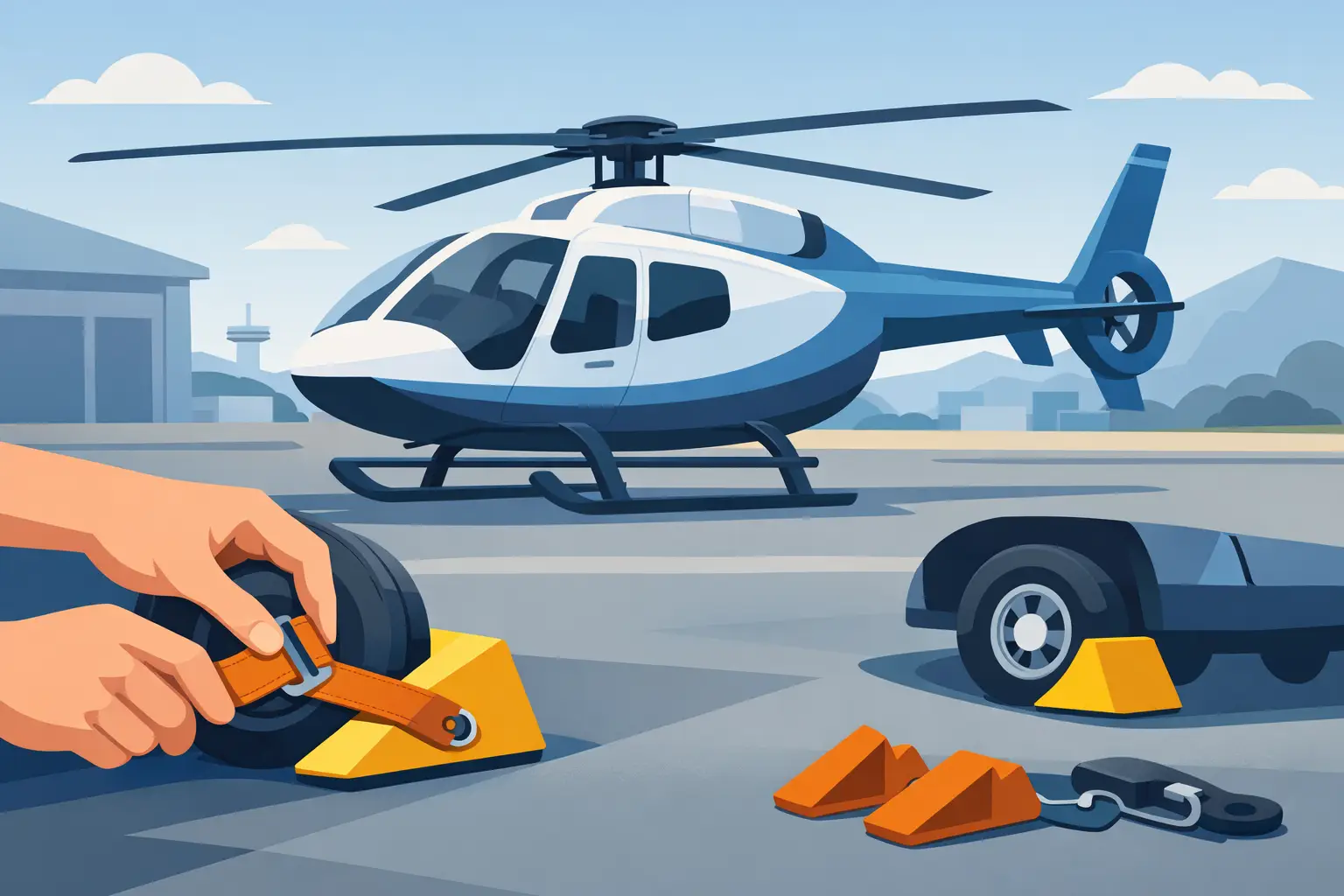
lightweight polyurethane chocks offer practical advantages over heavy metal or timber alternatives. They are easier for ground crews to carry, resist moisture and many common ramp contaminants, and do not splinter. Material selection still depends on the operating environment. On polished hangar floors, wet concrete, icy pavement, or loose gravel, the base grip and condition of the surface require closer attention.
High-visibility color can also reduce trip hazards and help crews confirm from a distance that the aircraft is secured. A chock must remain visible, but it must never obstruct aircraft access, emergency routes, or the intended path of ground-support equipment.
Park the helicopter on the flattest practical surface and align it as required by the parking plan. Set the parking brake only if the aircraft procedure calls for it. A brake can supplement chocks, but it should not be treated as the only safeguard against movement during a long parking period or changing temperatures.
Once the rotor system has fully stopped, or at the point specified by the operator’s procedure, approach the aircraft using the approved safe route. Stay clear of hot exhaust areas, antennas, moving surfaces, and any active ground equipment. Never place or remove chocks around an aircraft with rotating components unless the operation specifically authorizes it and the crew is trained for that condition.
Place chocks snugly against the tire at the ground contact area. The chock face should sit square to the tire, not at an angle that lets the wheel push it sideways. On level ground, use the prescribed fore-and-aft arrangement. On a slope, prioritize the downhill side of each required wheel, then add the opposite-side chock where the procedure requires dual restraint.
Do not force a chock under a loaded tire or strike it into position. If the aircraft has rolled onto the chock, request controlled repositioning rather than attempting to pry or kick it loose. The goal is firm tire contact, not excessive compression or a gap that allows momentum to build.
After placement, make a visual check from both sides of the aircraft. Confirm that each required chock is in full contact with the tire, seated flat on the surface, and free from hoses, stones, ice, FOD, or pooled fluid. The chock position should be communicated to the pilot, tow team, or maintenance lead according to the local handoff procedure.
A level, sheltered hangar apron presents one set of conditions. An exposed ramp during gusting wind presents another. Chocks are highly effective against rolling, but they do not replace aircraft tiedowns when wind limits, overnight parking requirements, or the helicopter manufacturer call for tiedown restraint.
On a slope, the direction of likely movement is clear: gravity will pull the aircraft downhill. Chocks need to oppose that movement first. On surfaces with cross-slope, water, snow, oil, or loose aggregate, the risk is more complex because the chock itself can slide or rotate. Inspect the surface before parking and move the aircraft to a safer location if practical.
Rotor wash from nearby aircraft can also affect unsecured items around a helicopter. Keep chocks staged in a designated location before use and remove them from the movement area after departure. Loose equipment, including a chock left in a taxi path, becomes a FOD and personnel hazard quickly.
Chocks are simple equipment, but repeated loading and weather exposure can reduce their effectiveness. A fast pre-use inspection prevents the common failures that create unnecessary ramp risk.
Check for these conditions before positioning a chock:
Remove damaged chocks from service. Do not keep them in circulation because they still appear usable. A failed chock often fails under load, when the aircraft is already moving and a crew member may be close to the wheel.
For larger operations, assign chocks to an inspection routine and mark them by size or aircraft group. Standardizing the correct chock set reduces time on the ramp and helps prevent a small general-aviation chock from being used on a larger helicopter tire. Rosén Innovation’s Swedish-made polyurethane range is designed around this practical need for lighter handling, repeatable strength, and recyclable material use in demanding ground environments.
Removing chocks is a controlled step, not a quick cleanup task. Verify that the pilot or tow operator is ready, the brake status is understood, the area is clear, and there is no person or equipment in the aircraft’s intended movement path. Confirm that all required chocks are removed, not just the ones visible from one side.
For towing, remove chocks only after the towbar or approved towing equipment is connected and the tow team has established communication. Store the chocks immediately in their designated rack, vehicle, or staging point. Leaving them beside the helicopter invites FOD, trip hazards, and missed equipment during a busy turnaround.
A properly sized chock is a small component in the parking plan, yet it directly supports safer servicing, maintenance, fueling, and overnight storage. Use the approved restraint method, match the chock to the tire and surface, and treat each placement as a deliberate control against unwanted aircraft movement.
">
A wheeled helicopter can move with less warning than a parked truck. Rotor wash, an uneven ramp, a gust through an open hangar door, or a small change in grade can load the landing gear in the wrong direction. Knowing how to secure helicopter wheels is therefore a basic ramp-control task, not an afterthought once the engine is shut down.
The correct method depends on the helicopter’s landing-gear configuration, the surface, slope, weather, and the operator’s approved procedures. Wheel chocks are a primary physical restraint for helicopters with wheeled landing gear, but they work only when they fit the tire, contact it correctly, and are placed by trained personnel at the right time.
The helicopter flight manual, maintenance manual, and operator’s ground-handling procedures take priority over any general chocking guidance. They specify when chocks are required, which wheels to chock, whether the parking brake may be used, and any limits related to wind, rotor operation, towing, or storage.
This matters because not every helicopter should be secured in the same way. A light helicopter on tricycle gear, a twin-engine aircraft with larger main tires, and a heavy transport helicopter each create different loads at the contact point. Some aircraft require chocks at both main wheels; others require additional nose-wheel restraint or tie-downs when parked outside. Helicopters on skid gear do not use wheel chocks at all and need approved skid restraints or tiedown equipment.
Do not substitute habit for the approved procedure. If the aircraft is being fueled, serviced, positioned in a hangar, or left unattended, review the local requirements before releasing the towbar or clearing the aircraft.
A chock is not simply a wedge placed near a tire. Its height, angle, width, material, and base grip determine whether it resists movement without damaging the tire or becoming displaced.
Select chocks sized for the helicopter’s tire diameter and width. A chock that is too low may allow the tire to climb over it. One that is too tall or steep may be difficult to place safely and can create excessive tire contact loads. The chock should span enough of the tire width to provide stable engagement without protruding into a walkway or service area.
For frequent ramp use, lightweight polyurethane chocks offer practical advantages over heavy metal or timber alternatives. They are easier for ground crews to carry, resist moisture and many common ramp contaminants, and do not splinter. Material selection still depends on the operating environment. On polished hangar floors, wet concrete, icy pavement, or loose gravel, the base grip and condition of the surface require closer attention.
High-visibility color can also reduce trip hazards and help crews confirm from a distance that the aircraft is secured. A chock must remain visible, but it must never obstruct aircraft access, emergency routes, or the intended path of ground-support equipment.
Park the helicopter on the flattest practical surface and align it as required by the parking plan. Set the parking brake only if the aircraft procedure calls for it. A brake can supplement chocks, but it should not be treated as the only safeguard against movement during a long parking period or changing temperatures.
Once the rotor system has fully stopped, or at the point specified by the operator’s procedure, approach the aircraft using the approved safe route. Stay clear of hot exhaust areas, antennas, moving surfaces, and any active ground equipment. Never place or remove chocks around an aircraft with rotating components unless the operation specifically authorizes it and the crew is trained for that condition.
Place chocks snugly against the tire at the ground contact area. The chock face should sit square to the tire, not at an angle that lets the wheel push it sideways. On level ground, use the prescribed fore-and-aft arrangement. On a slope, prioritize the downhill side of each required wheel, then add the opposite-side chock where the procedure requires dual restraint.
Do not force a chock under a loaded tire or strike it into position. If the aircraft has rolled onto the chock, request controlled repositioning rather than attempting to pry or kick it loose. The goal is firm tire contact, not excessive compression or a gap that allows momentum to build.
After placement, make a visual check from both sides of the aircraft. Confirm that each required chock is in full contact with the tire, seated flat on the surface, and free from hoses, stones, ice, FOD, or pooled fluid. The chock position should be communicated to the pilot, tow team, or maintenance lead according to the local handoff procedure.
A level, sheltered hangar apron presents one set of conditions. An exposed ramp during gusting wind presents another. Chocks are highly effective against rolling, but they do not replace aircraft tiedowns when wind limits, overnight parking requirements, or the helicopter manufacturer call for tiedown restraint.
On a slope, the direction of likely movement is clear: gravity will pull the aircraft downhill. Chocks need to oppose that movement first. On surfaces with cross-slope, water, snow, oil, or loose aggregate, the risk is more complex because the chock itself can slide or rotate. Inspect the surface before parking and move the aircraft to a safer location if practical.
Rotor wash from nearby aircraft can also affect unsecured items around a helicopter. Keep chocks staged in a designated location before use and remove them from the movement area after departure. Loose equipment, including a chock left in a taxi path, becomes a FOD and personnel hazard quickly.
Chocks are simple equipment, but repeated loading and weather exposure can reduce their effectiveness. A fast pre-use inspection prevents the common failures that create unnecessary ramp risk.
Check for these conditions before positioning a chock:
Remove damaged chocks from service. Do not keep them in circulation because they still appear usable. A failed chock often fails under load, when the aircraft is already moving and a crew member may be close to the wheel.
For larger operations, assign chocks to an inspection routine and mark them by size or aircraft group. Standardizing the correct chock set reduces time on the ramp and helps prevent a small general-aviation chock from being used on a larger helicopter tire. Rosén Innovation’s Swedish-made polyurethane range is designed around this practical need for lighter handling, repeatable strength, and recyclable material use in demanding ground environments.
Removing chocks is a controlled step, not a quick cleanup task. Verify that the pilot or tow operator is ready, the brake status is understood, the area is clear, and there is no person or equipment in the aircraft’s intended movement path. Confirm that all required chocks are removed, not just the ones visible from one side.
For towing, remove chocks only after the towbar or approved towing equipment is connected and the tow team has established communication. Store the chocks immediately in their designated rack, vehicle, or staging point. Leaving them beside the helicopter invites FOD, trip hazards, and missed equipment during a busy turnaround.
A properly sized chock is a small component in the parking plan, yet it directly supports safer servicing, maintenance, fueling, and overnight storage. Use the approved restraint method, match the chock to the tire and surface, and treat each placement as a deliberate control against unwanted aircraft movement.